A single smell can return you to childhood in an instant —
And yet… you can’t remember what you ate yesterday.
A single word triggers rage.
You obey fears that make no sense.
You repeat habits you hate.
Why?
Because the mind is not a simple container of information.
It’s a structure millions of years old —
and it can easily become a prison.
And that prison forms quietly:
Instincts you never chose.
Cultural scripts you absorbed before you could speak.
Habits you never noticed.
We will open this structure and look within.
Not to fix it, not to improve it,
but to see what we are up against.
The mind is not fragmented.
Yet we divide it here so we can look within —
to see what is usually unseen:
mental noise and its source.
When the mind is understood in its full,
these divisions must be abandoned.
And this leads to the brutal truth:
Until you see the architecture you are living inside,
there is no freedom.
Only repetition.
So what exactly is this architecture we’re trapped within?
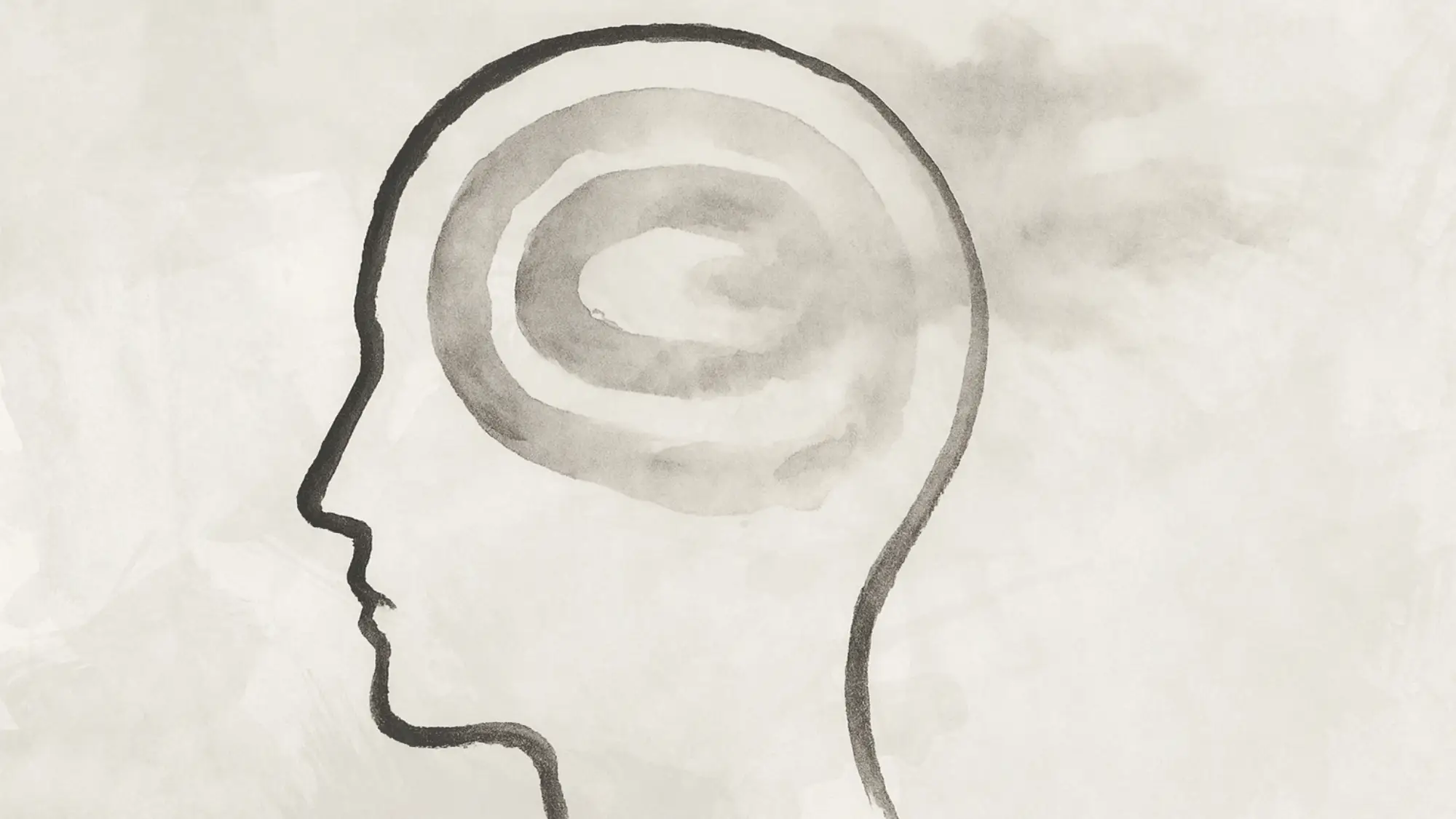
The Architecture
Right out of the womb,
our brains come pre-loaded with
survival circuitry,
a capacity to learn new concepts,
and a capacity to optimize itself.
Think of what happens when you take a new mobile out of the box.
You get –
An operating system – it keeps the system running and enables everything else.
Default and installed apps – tools that help you function efficiently.
Personal data – contacts, messages and images that make it personally meaningful.
Similarly, your memory too can be thought of as organized into:
Ancestral memory (the OS) – instinctive survival systems passed down through evolution, constantly running beneath the awareness.
Automatic memory (the apps) – learned habits and skills that help you operate efficiently.
Acquired memory (your data) – language, stories, identities and experiences that shape your personal narrative.
The question is:
what does this architecture mean for your daily life?
And more importantly —
can you ever step outside it?
Let’s start with the deepest layer.
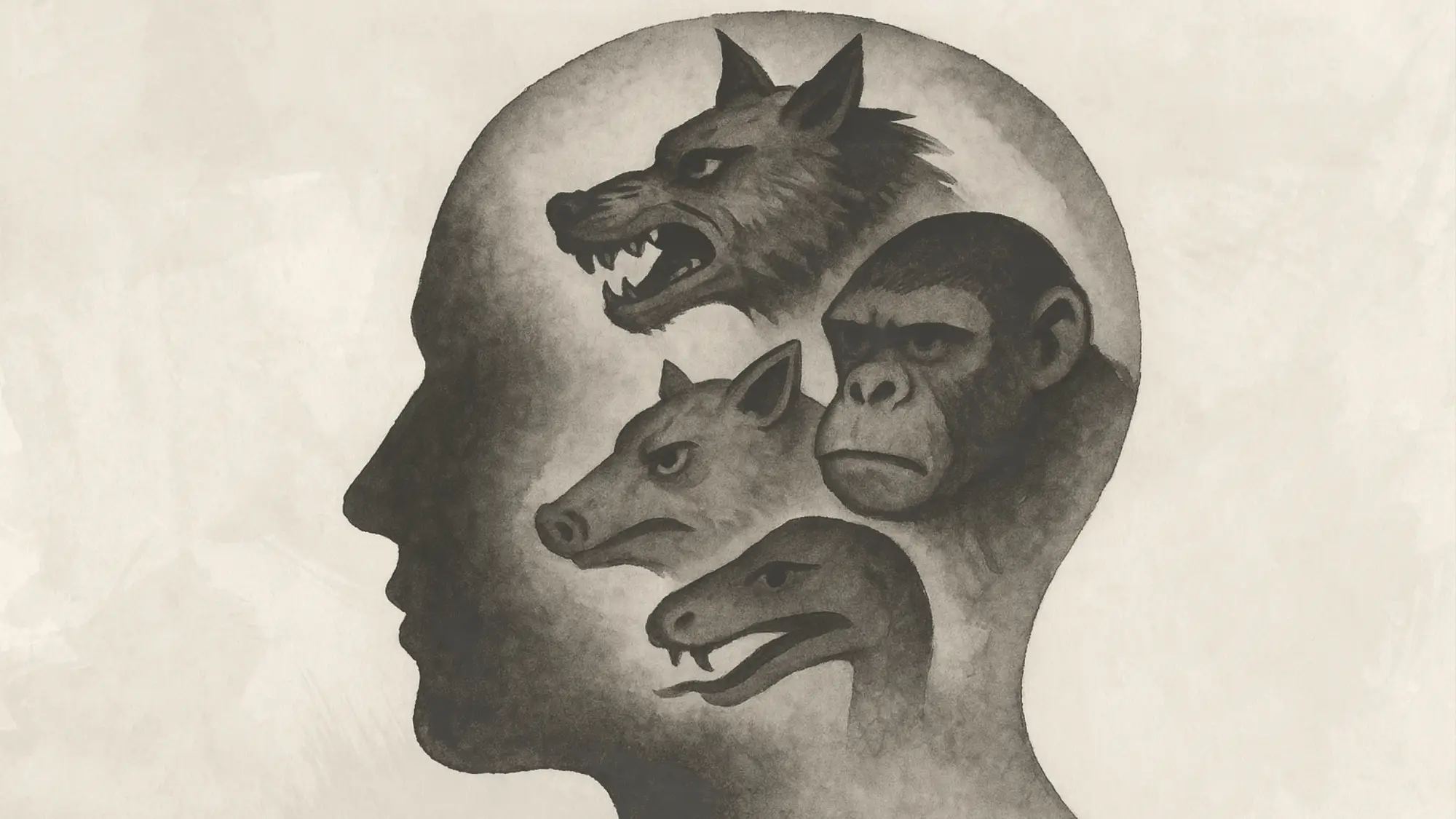
1. Ancestral Memory
You explode at someone you love — and 10 seconds later you regret it.
That was an ancient threat system firing.
Ancestral memory is the biological inheritance —
a pre-built brain circuitry
that shapes how you think, feel, and act today.
Evolution programmed you with —
Instincts and Reflexes — automatic reactions and preferences. Like why you fear falling, why sweet tastes safe, and why you feel disgust toward a rotten smell.
Evolutionary priorities — your compulsive drives for food, sex, and safety.
Biases and Heuristics — your mental shortcuts to make quick decisions under uncertainty and pressure.
How does this show up in everyday life?
In any given situation,
it is impossible to evaluate every option
and choose the perfect response.
This base layer is what we begin with —
a potential state —
wired with survival priorities you never chose.
It allows specific fears and biases
to be learned as we move through life.
Over time, the mind forms and defaults to
mental shortcuts —
fast, automatic patterns for quick decisions.
This base memory over time manifests as:
Threat and Anxiety
The fight, flight, freeze, or fawn loops —
Fight: You snap, you argue, and you rush to anger trying to control the world.
Flight: You avoid difficult conversations, procrastinate on projects, and withdraw — trying to escape discomfort.
Freeze: You grow indecisive, numb, and lose yourself in indulgence — avoiding real engagement.
Fawn: You say “it’s fine” when it’s not, apologize too quickly, and overthink every response — trying to keep everyone happy.
Attraction and Desire
Helpless infants shaped our biology.
We needed committed partners —
for protection, resources and stability.
That ancient mate-guarding system persists,
manifesting as
jealousy, possessiveness and control —
the reactions you feel before you can explain them.
And the circuitry built for attraction?
It once secured reproduction.
Today it fuels hours of
porn, sexting, and scrolling through digital desire.
Hunger and Cravings
In a world of scarcity —
every calorie meant survival.
Our craving for sweet, salty, and fatty foods was adaptive.
Today, with endless availability,
that same drive fuels —
overeating and junk-food addiction.
Tribalism
The instinct to divide people into “us vs. them” once kept tribes alive.
Now it tears societies apart.
The same ancient capacity for dividing ourselves
now expresses itself through modern identities:
nationality
religion
race or ethnicity
caste
political groups
even online echo chambers
These inherited divisions create a powerful illusion:
“My group is right, pure, superior.
Other groups are wrong, inferior, dangerous.”
This imagined sense of
“my people,”
“who I am,”
“what I stand for,”
inflates into
false pride,
moral rigidity,
and conflict that never ends.
Tribalism narrows the world into tiny circles of “us.”
Instead of genuine connection, it creates shallow interactions.
Instead of strengthening bonds, it isolates.
Instead of belonging, it breeds insecurity.
Instead of clarity, it fuels conflict.
What does this all mean?
When the heart races at a raised voice,
when jealousy appears out of nowhere,
when craving overrides intelligence —
it is ancestral memory showing up.
Sex, sugar and social striving —
once essential for survival —
now trap us in cycles of
obsession, overconsumption, and overthinking.
The key is to recognize that these instincts are not you.
They are evolutionary residue —
ancient programs running in modern environments.
Resisting it usually strengthens it.
Obeying it becomes captivity.
Every attempt to justify or change it only binds you more tightly to it.
What matters is the seeing itself —
the clear awareness of the noise
and the suffering it generates.
To see is not to judge,
not to resist,
not to escape,
but simply to notice —
the movement of thought,
the surge of feeling,
the impulse to act —
all unfolding on their own.
In that simple seeing,
instinct loses its grip.
Take a raised voice.
The body reacts —
a sudden tightening in the chest,
a sharp breath,
the old impulse to defend or strike back.
But in that moment of clear awareness,
you simply notice it:
the rush of thought,
the heat in the body,
the ancient reflex unfolding.
There is no judgment,
no suppression,
no surrender —
just seeing.
And in that seeing,
the reflex dissolves.
Ancestral memory built the foundation.
But on top of it, another layer forms —
the layer of habit, repetition, and conditioning we never notice.
This is Automatic Memory.
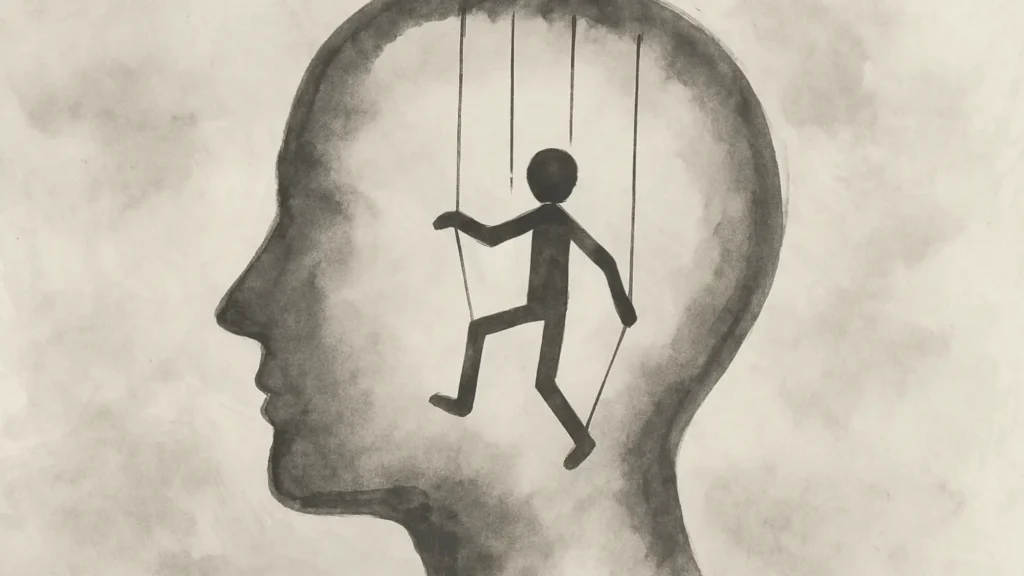
2. Automatic Memory
You wake up, and your phone is already in your hand.
You didn’t choose that. Your conditioning did.
Automatic memory develops when —
repetition turns effort into reflex.
It makes life easier —
but also mechanical.
It includes:
Skills — useful abilities like typing or driving.
Habits — repeated routines set off by similar situations.
Conditioned responses — emotional reactions formed by past experience.
Let’s expand this a bit more.
Ease and Skill
Skill, in the outer world, is useful.
It is the fruit of knowledge, repetition, and experience.
Practice brings refinement;
repetition brings ease;
and with ease, action becomes fluid and effortless.
In communication, in craft, in movement,
doing becomes graceful
when the body and mind are trained.
But inwardly, the same movement cannot apply.
There is a common misunderstanding:
that the mind can be trained and skilled like a muscle.
that noise can be managed, reshaped, or disciplined away.
So we try techniques —
psychological reframing, breath control, repeating mantras —
all in the hope that practice will quiet the turbulence.
The mind cannot be trained to free itself.
Techniques may help for a moment,
but they cannot silence the deeper noise.
To use thought to tame thought
is like trying to smooth water with your hand —
the more you touch it, the more it ripples.
Reframing thoughts, reshaping emotions or explaining them away —
all this is the mind rearranging its own illusions.
The mind cannot end its own movement.
Thought cannot quiet thought.
Like a snake trying to swallow its tail.
So we look everywhere for solutions:
Psychology says:
“Change your thoughts. Replace the fear with something positive.”
Religion says:
“Give it to God. Pray harder. Trust that you are being looked after.”
Family says:
“Keep yourself busy. Don’t dwell on it. Just push through.”
Science says:
“Adjust the chemistry. Train the behavior. Regulate the system.”
Each offers reassurance,
each offers a method,
yet all rely on the very same engine —
thought correcting thought,
fear soothing fear,
the self trying to fix itself.
Humanity has built countless strategies,
thousands of years of philosophy, therapy, ritual, self-improvement —
and still the noise remains,
because the root has never been touched.
From confusion, no method leads to clarity.
From illusion, no path leads to truth.
What is needed is simple awareness —
without naming, resisting, or choosing.
In that effortless attention,
all illusions end on their own,
like water settling when left untouched.
There is no attempt to control or fix —
and that’s precisely why the pattern loosens.
Habits and Conditioned responses
While skills are conscious and deliberate,
habits and conditioned responses are automatic patterns —
reactions that run without awareness.
Habits are set off by time and place;
conditioned responses by emotion or memory.
Over time, habits turn places into trap zones.
Bed turns into a binge zone.
Desk turns into a distraction zone.
Kitchen turns into an impulse-eating zone.
You find yourself — often —
watching videos, browsing unnecessarily, eating without hunger.
And conditioning shapes your inner world the same way —
not in places, but in emotions,
turning living into emotional reflexes:
biting nails in anxiety,
scrolling in loneliness,
snacking in stress,
oversleeping in sadness,
snapping in anger,
comparing in insecurity.
And sometimes conditioning goes even deeper —
the past returns without invitation:
a person triggers defense,
a place triggers tension,
a song triggers nostalgia.
There are no “good” or “bad” emotional habits —
only conditioning.
Whenever behavior runs on compulsion,
it lacks understanding, awareness, and freedom.
So the mind, seeing its own disorder, reaches for control.
It creates new patterns to escape the old —
but the escape becomes another trap.
Habits meant to calm the mind
only delay the discomfort.
Chanting, rituals, practices —
they may soothe for a moment,
but become another form of dependence when repeated blindly.
To live in an ever-changing world
requires spontaneity —
freshness, alertness, and responsiveness.
What does this mean for everyday living?
You stop at a red light.
There is nowhere to go.
And still, you unlock your phone.
No intention.
Not boredom.
Just repetition.
This is automatic memory in motion —
the mind repeating what it already knows.
In the outer world, skill matters.
Practice sharpens action,
repetition brings mastery.
But the inner world works differently.
Clarity is not a skill.
Awareness is not a habit.
Understanding is not the result of practice.
They do not arise from effort or discipline,
but from the absence of it —
from a mind that simply sees.
Inwardly, habits do not free;
they confine.
They bind the present moment
to the past.
But when a habit is observed
without judgment or resistance,
something subtle happens:
its machinery becomes visible —
and in that visibility,
it begins to loosen.
Freedom is not created.
It was never absent —
only hidden.
When automatic memory loses its grip,
freedom reveals itself.
Automatic memory shapes your reactions.
But there is something even more powerful —
the layer that shapes your identity.
3. Acquired Memory
Your friend buys a house, and suddenly you feel behind.
A colleague gets promoted, and you feel smaller.
That isn’t truth.
That is cultural programming.
Acquired memory is the layer shaped by upbringing,
culture,
society,
religion,
and experience.
It is the collection of stories and images you carry —
defining who you think you are,
what you believe you deserve,
and how the world is supposed to work.
The core patterns we carry include:
Cultural knowledge —
Roles, expectations, and social scripts.
What it means to be “successful,” “normal,” or “worthy.”Images —
the picture you hold of yourself,
of others,
and of the future.Personal Experiences —
Childhood wounds,
early praise,
victories,
failures,
and the meanings you stitched around them.
How does this show up in everyday life?
Culture, Society, Religion
Culture shapes your ideals —
what success looks like,
what shame feels like,
what is acceptable,
and what must be hidden.
Society polices behavior —
through rules, reward, and punishment.
It is built for order,
not freedom.
Religion shapes your moral universe —
what is sacred,
what is forbidden,
and the stories that promise hope
or cast shadows of fear.
But if all of that were removed —
the fear of punishment,
the lure of reward,
the need for approval,
the pressure to obey —
What would remain as right and wrong?
Where there is clarity,
is there any need for commandments?
Violence inevitably brings
conflict, retaliation, suffering.
Love naturally brings
clarity, harmony, freedom.
No authority needs to declare it.
Truth is seen, not taught.
From this kind of seeing, action flows on its own.
Clarity doesn’t consult a rulebook;
it simply responds.
Where there is clarity,
there is natural order.
Where there is confusion,
there is disorder —
and disorder invites control, discipline,
and the rise of outer authority.
But clarity dissolves the need for all of it.
When one truly sees, no rule is needed;
when one does not see,
no rule is enough.
Fears and Desires
Some fears are ancestral —
fear of physical pain,
fear of social exclusion,
fear of threat and uncertainty.
But many fears are acquired —
fear of failure,
fear of humiliation,
the fear of being unloved or abandoned.
These emotional patterns grow from
parental expectations,
social comparison,
and old emotional wounds.
In the same way, some desires are ancestral —
the desire for sex,
for safety,
for belonging, status, recognition.
But desire is also acquired —
the craving for success or luxury,
the urge to prove yourself,
the longing to be admired,
the hunger for meaning.
These are shaped by cultural ideals,
peer pressure,
and the personal narratives we carry.
Fear and desire move differently,
but they do the same work —
they distort how we look at life.
They push us toward grasping or avoiding,
leaving us reactive, striving, mechanical.
When they are unseen, they rule us.
When they are seen, they loosen.
And in that loosening,
a different freedom appears —
one that does not come from removing fear
or fulfilling desire,
but from no longer being defined by them.
Relationship Images
You carry images of others —
pictures shaped by past interactions,
stored emotions,
and the meanings you attached to them.
These images meet people before you do.
You respond not to the person in front of you,
but to the version your mind has already drawn.
Stereotypes set the stage long before real contact happens:
the controlling parent,
the nagging spouse,
the toxic boss,
the nosy relative,
the aggressive culture,
the ‘backward’ nation.
You meet the image of the friend,
the image of the partner,
the image of the boss —
not the living human being.
So you respond to a frozen picture —
a past impression,
a stored judgment,
an outdated memory.
This blocks real contact.
It prevents fresh perception.
It replaces presence with expectation.
When the image stands between you and another,
the living person becomes distant —
even if they’re sitting right beside you.
But when you begin to notice
how expectation moves —
how the past presses into the present,
how your listening tightens,
how your view of the other shrinks,
and how your reactions ignite before you choose them —
the image begins to dissolve.
This is how it shows up in daily life:
A friend arrives late.
Before they speak,
your mind summons the old story —
“they never value my time.”
Your breath shortens,
your patience collapses,
your mood turns cold.
But if you catch this as it happens —
the mind rushing ahead of reality —
the story dissolves,
and the moment becomes fresh again.
And in that dissolution,
a real relationship becomes possible —
one that is present, unforced, and alive.
Self-Image
Self-image is the idea you carry of yourself —
who you think you are,
who you’re supposed to be,
and who you believe you must become.
Shaped by biology, family, society, and experience,
it becomes the lens through which you meet your own life.
It gives you limitations —
self-doubt, hesitation, avoidance:
“If I speak up, they’ll see I’m not enough.”
“I never fit in.”
“People like me don’t get noticed.”
It gives you ideals —
the person you think you should become,
fueling pressure, comparison, and constant striving.
It includes the roles you have internalized
and feel compelled to live up to:
“I am a good son or daughter.”
“I have to be the dependable one; people rely on me.”
“I must always stay calm.”
It shapes your moral and personal identity:
“I’m someone who never lets others down.”
“I’m the one who has to do the right thing.”
It creates the image of how others see you —
or should see you —
competent, attractive, successful, admirable.
It shapes your sense of position among others,
fueling insecurity, competitiveness, and pride:
“They’re moving forward… and I’m still stuck.”
“At least I’m doing better than most people I know.”
And it contains the stories you tell about your life:
“I’m a survivor.”
“I always have to hold things together.”
“Nothing ever comes easy for me.”
All these images together
form the mental picture you call “me” —
a picture that demands protection,
seeks validation,
and stands between you and the present moment.
But when you begin to notice
how the image operates —
how it narrows your choices,
tightens your reactions,
and pushes you toward looking successful, attractive, intelligent —
the image loosens.
And as it loosens, you begin to feel free —
free from past definitions,
free from the expectations that chase you,
free from the need to prove or protect yourself,
free from comparison and approval,
free from the story of who you thought you were,
free from the exhausting gap between the real and the ideal.
What does this mean for everyday living?
Culture, society, and religion hand you a script —
Be moral.
Follow the norms.
Behave properly.
Avoid punishment.
Don’t shame the family.
Do things at the “right” time —
the degree, the job, the marriage.
They create inner musts and must-nots,
define ideas of success, submission, and shame,
and turn cultural milestones into illusions of meaning and purpose.
Fear and desire then fuel the script.
You avoid embarrassment, failure, rejection.
You chase success, approval, and admiration.
And the images you carry of yourself and others tighten the loop —
you don’t meet people as they are,
you meet the memory of them.
You don’t meet yourself freshly either —
you meet the story of who you think you are.
So in daily life, when you —
flinch at someone’s success,
tense up around certain people,
feel smaller after scrolling through perfect lives,
try to impress, outperform, or stay invisible —
it isn’t “you” responding.
It’s acquired memory replaying its conclusions.
Acquired memory is useful outwardly —
it gives you the language to relate,
the knowledge to work,
and the norms to navigate society.
But inwardly,
it becomes a lens that distorts everything.
You don’t meet reality — you meet conditioning.
Memory is not a recorder.
It is a lens —
shaped by culture, fear, desire, and the images you carry.
Freedom begins the moment you see the lens as a lens —
when you recognize the script running,
the fear pushing,
the desire pulling,
the image shaping the encounter.
In that seeing, the grip loosens.
And when the grip loosens, the mind becomes clear.
To live freely is to meet this moment
without dragging the past into it.
Ask yourself:
If everything you call “me” is memory —
what, then, is actually you?
Conclusion
We divided memory into three categories only to make the invisible visible.
It does not matter how accurate these divisions are.
What truly matters is this:
The mind is mechanical —
a machine built by the past,
running on repetition.
As long as we are caught in this machine,
our reality remains an internal projection —
filtered, shaped, and distorted by layers of memory.
We never meet reality directly.
We meet our interpretations of it.
Freedom does not come from knowledge,
from discipline,
or from the passing of time.
It comes from seeing clearly.
Seeing is the awareness
of how the mind seizes you,
floods you with old fears and cravings,
and veils the present moment with yesterday’s stories.
You cannot escape the architecture of the mind —
memory and thought will continue to exist.
But when there is clear seeing,
when the mind understands its own mechanical nature,
thought stops intruding.
The mind becomes quiet —
not by force,
not by effort,
but by understanding.
It grows clear as still water.
Transparent.
The machinery falls silent.
No patterns firing,
no compulsive movement of thought —
and the present shines through unobstructed.
With such clarity,
memory quietens,
attention has no motive,
and life becomes available —
fresh, unfiltered, immediate.
Life is not remembered —
it is lived.